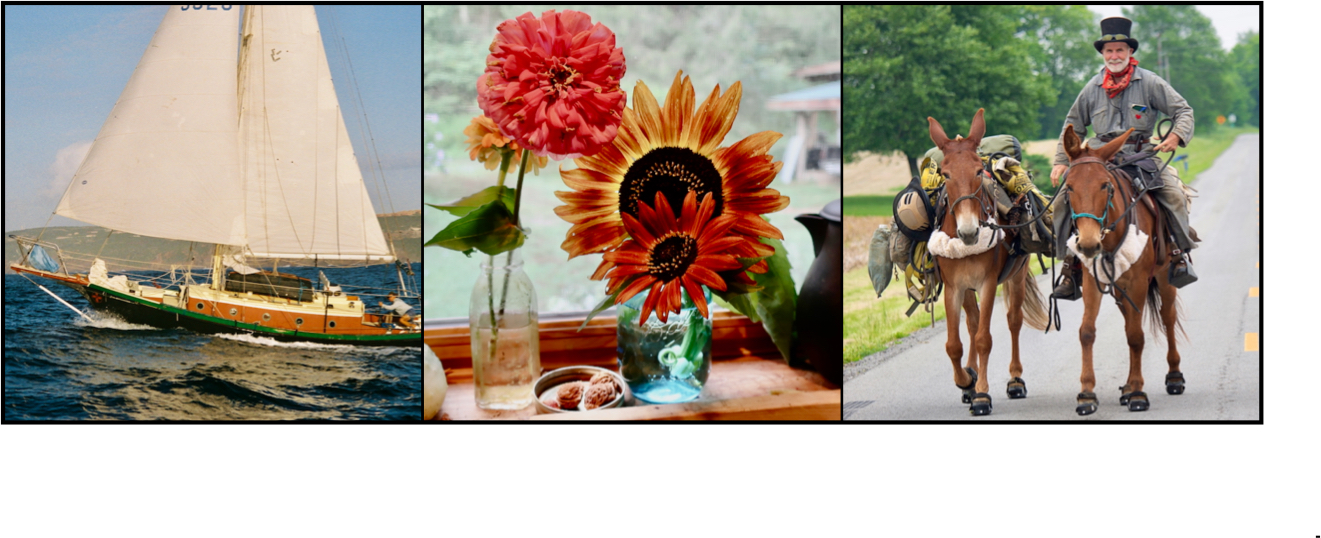
Woody and I arrive at what feels like the emotional start of our journey – the Atlantic Ocean.Woody and I riding along the surfline. Note how little gear he is packed with. I cut weight as much as possible.Riding up a sand-blown, wintry-looking beach. Thanks to the Irishman whose name I’ll never know who snapped this photo.
Getting a Mule to the Ocean
In North Carolina, getting a mule down to the Atlantic is pretty tough. That’s because the Outer Banks shield the mainland from the ocean for about two-thirds of North Carolina’s coastline. The other third is cut off by the ICW and its 65-foot bridges.
Getting a mule to the sea is a real pain actually. I even thought about fudging it.
In Beaufort, I was tempted to tell Woody that Taylor Creek was in fact the ocean. It smelled salty, showed the requisite tides and was full of seagulls. The thought had crossed my mind on the Minnesott ferry as well. Out there on the Neuse, you can see waves for miles.
But no, it doesn’t do to lie to a mule.
So I took a seven-day detour via the Croatan National Forest so we could step into the real thing. My goal? Bogue Banks, specifically, Emerald Isle.
The Bogue Banks lie at the bottom of the Outer Bank chain, where the islands peter out into mainland. It’s separated from the mainland by the prop-busting shallows of Bogue Sound.
In fact, until the Intra Coastal Waterway was dredged through the sound, stock was walked across to the island from the mainland. Then came the ferry, and finally, in the 1970’s, the current high rise bridge.
Sign up for The River, the RiverEarth newsletter, for occasional doses of rambling and homestead life. Plus you'll get a free copy of my 155-page illustrated ebook 19 Million Mule Steps.





Leave a Reply