Someone to Stand Watch: What the Wild Ponies of Shackleford Banks Still Know
I, Bernie Harberts, did not use generative AI to write or illustrate this article. Spell check and grammar check, yes. AI, no.
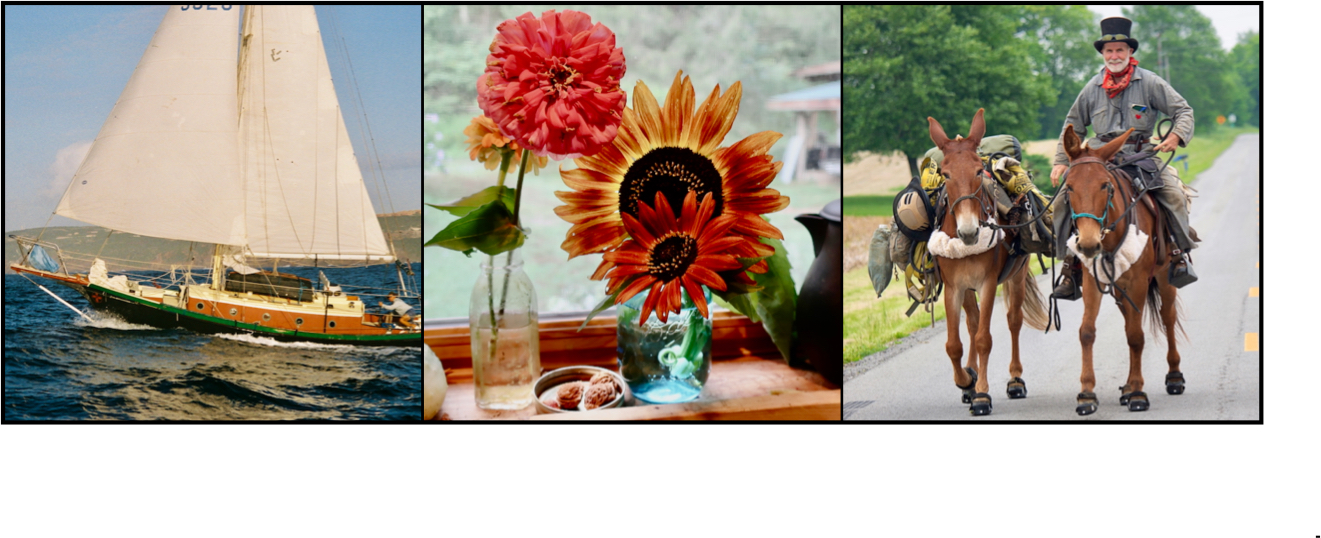
My wife Julia and I had been anchored off Shackleford Banks on our sailboat Grit for nearly a week, studying the wild ponies that call the 8-mile-long uninhabited island home.

The goal was a slow, unhurried look at the bands — to really understand their social order the old-fashioned way, by just watching. These horses have called Shackleford Banks home for four hundred years. We knew that if we took the time to look at them with no agenda, just open eyes, we would learn something. We just didn’t know what.

We’d been making shorter forays out from Grit, getting our bearings, beginning to understand who was who among the ponies and what bands occupied what parts of the island. Today was the day we decided to find a band and sit quietly with them, just to observe.
We rowed ashore, walked into the dunes and found sand, cord grass, prickly pears, empty conch shells, wind off the Atlantic. But no ponies. I pulled out my recorder and said the following: “It’s like we’re walking out onto a blank sheet of sand this morning, with no idea what, if anything, will appear.”
We walked slowly through the dunes. Our feet slid gently downhill through the cord grass, like walking through powdery snow. Twenty minutes later we came across our first band.
Four ponies. A dark bay stallion Julia guessed was the lead stallion. Two aged mares — one a faded chestnut with a roany face, the other dark bay. And a fourth: a ginger-colored stallion with a thick flaxen mane and tail. Julia guessed he was the lieutenant stallion, a younger male that helps defend the herd and may one day take it over when the older stallion ages out.
We sat on top of a sand dune and watched them browse, getting a feel for the group’s dynamic.
Then the lieutenant lifted his head, like he’d seen something, galloped away and disappeared over a dune.
A few moments later, he appeared on the other side. Two dark bay mares greeted him.
The lieutenant and the mares started grazing, like they knew each other. Julia and I slowly got up and walked to a nearby dune that overlooked them. One mare looked pregnant. Her belly bulged below her rib cage in a way that meant she was going to drop a foal in days or weeks, not months. At her side was what we guessed was her two-year-old daughter — bay, lighter colored, smaller frame.

The main stallion and the two aged mares wandered over to join them. The six ponies grazed and napped in one common group, as if this happened every afternoon.

Forty minutes in, the two-year-old lay down in the sand.
She didn’t lie down like she was a little sleepy. She went all the way down and surrendered as though administered anesthesia — the kind of total boneless sleep where a horse’s nervous system lets go of every trace of vigilance. Legs loose, head and neck stretched flat on the ground, one eye plastered to the sand. Her mother stood over her and scanned the surroundings, an occasional ear flicking, her back hoof cocked.
That’s a particular kind of sleep. The animal on the ground has to trust, without qualification, that someone is standing watch. The mare knew her daughter needed rest and the daughter knew she could check out because her mother was there.
Julia and I watched the two stallions and the aged mares. Each member of the band knew exactly where they stood.
The aged mares had been here long enough to know things the younger horses didn’t. Where the best centipede grass grows after a long winter. Which oak trees in the tangled forest on the sound give the best shelter in a hard northeast blow. The lieutenant was learning something from watching the stallion that no one was consciously teaching him. The two-year-old was learning something else entirely by staying close to her mother. She was learning about trust, and presence, and what it means to have someone who will stand over you while you sleep.
Ten minutes after the filly zonked out, the mare sidled over, like she was saying, “Okay, time to get up.” The filly stood and didn’t hold a grudge. Then the mare folded her legs and lay down on the sand. The filly quietly scanned the landscape while her mother napped.
That was the exchange. The old help the young. Then the young help the old.
In a few weeks, when the mare drops her foal, the two-year-old’s life will change. Her mother will slowly ease her away. She’ll join a band of bachelor stallions until one singles her out and, if nature runs its course, he’ll breed her. She’ll take, and then she’ll have a colt or filly of her own to stand watch over. That’s how bands stay healthy. That’s how new ones form from old ones.
Every pony on this island has a sense of where they fit in — as a mother, father, sister, brother, or part of the band they sprang from. Knowing who your people are tells you where you stand. Fewer misunderstandings. Fewer strangers. One thing that surprised Julia about this band, and every other one we saw, was how unmarked they were. Almost no teeth, kick, or bite scars, even on the stallions.
From what we observed, they just co-existed on their sandy island.
Sitting on that dune, watching a mare stand motionless over her sleeping daughter, I kept thinking something in the arrangement we’ve built for ourselves is thinner than what I was looking at.
Some days you need to sit on a windy dune with no idea what’s coming. Then stay long enough to find out.
Sailing to the Island of the Wild Ponies
Want to know how we got there? Here’s the story of our sail to Shackleford Banks.

Julia’s side of the voyage at Saddle Under the Stars:
More from sailing to Shackleford Banks.
Let's Keep in Touch
Sign up for The River, the RiverEarth newsletter, for occasional doses of rambling and homestead life. Plus you'll get a free copy of my 155-page illustrated ebook 19 Million Mule Steps.
Explore More of RiverEarth


Leave a Reply