Best Hoof Boots for Horses: A Long Rider’s Review After 32 Days on the Trail
I, Bernie Harberts, did not use generative AI to write or illustrate this article. Spell check and grammar check, yes. AI, no.

What’s the best hoof boot for your horse or mule? I’m a Long Rider with over 6,000 miles of Long Riding under my saddle with horses and mules, and I’ve used hoof boots on all my rides. My wife Julia and I put three brands to the test on a 32-day ride from North Carolina to Virginia and back. Here’s what we learned about Cavallo, EasyBoot and Renegade hoof boots.


About Hoof Boots and Me.
I have traveled over 10,000 miles with hoof boots by saddle and wagon. That’s both ways across America, from North Carolina to Idaho, across Newfoundland and over 1,000 nights on the road.

- Oriental, North Carolina to San Diego, California (13 months)
- Neptune, Saskatchewan to Fort Hancock, Texas (14 months)
- Across Newfoundland (4 months)
- Lenoir, North Carolina to Triumph, Idaho (6 months)
- Lenoir, North Carolina to Damascus, Virginia + return
- Various weeklong wagon and saddle trips
Let’s Keep in Touch
Sign up for The River, the RiverEarth newsletter, for occasional doses of rambling and homestead life. Plus you’ll get a free copy of my 155-page illustrated ebook 19 Million Mule Steps.


Hoof Boots in Film and Print
I have written, filmed, and appeared in the following books and movies about my horse and mule voyages. All these trips were done in hoof boots.
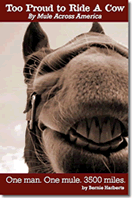
- “Too Proud to Ride a Cow”: the book of my Atlantic to Pacific mule ride
- “Woody and Maggie Walk Across America”: the kid’s book about my Atlantic to Pacific mule ride
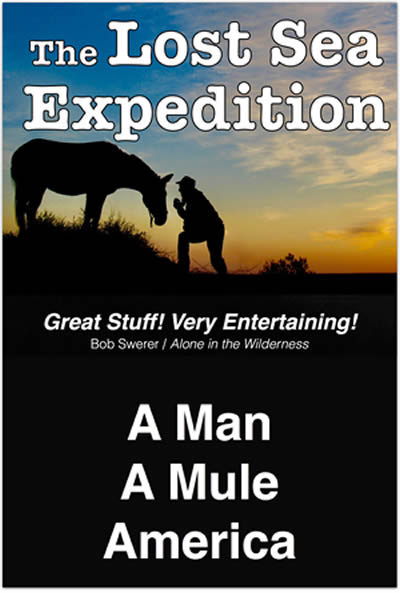
- “The Lost Sea Expedition”: the 4-part Public TV series about my barefoot mule voyage from Canada to Mexico. (Stream the Lost Sea Expedition free on YouTube.)
- “Mule Rider“: The regional-Emmy award-winning UNCTV/PBS/Our State magazine episode about traveling through coastal North Carolina in a mule-drawn wagon. (Stream here on YouTube)
- “Swan Song“: PBS NC double feature special (1 hour long) about mule Polly’s wintry wagon voyage through Hyde County and Lake Matamuskeet. (Stream here on YouTube)
My books and films are available in the RiverEarth.com General Store.
Why I Switched to Hoof Boots
Early in my mule travels, I switched from steel shoes to barefoot. I found it healthier for the animal’s feet. Also, like many people, I wasn’t comfortable driving nails into my animal’s hoofs. Instead, I focused on becoming a competent barefoot trimmer and learning how to fit hoof boots correctly.
Hoof boots let me combine the benefits of barefoot travel with the extra protection I could add as needed. This let me take complete control of my animals’ hoof care instead of relying on others.
Over the years I’ve learned that with proper guidance, this is a system anyone with a bit of skill and interest can master.

This Report IS:
– an account of 2 folks, 3 mules and 3 brands of hoof boots undertaking a month-long, barefoot saddle ramble in western North Carolina and the Virginia High Country.
– an endorsement of barefoot hoof trimming. We’ve had great success making the transition from steel shoes to hoof boots and our latest trip just reinforced that decision.
This Report is NOT
- a scientifically conducted comparison of hoof boots. It was not conducted under controlled lab conditions. It is not, in the words of statisticians, “robust”.
- an endorsement of any hoof boot company. Different boots work for different folks. We would have been happy taking any of the 3 boots tested on a long ride. The trick is to know the strengths and weaknesses of each boot.
The Story
On August 31, Julia and I tacked up our mules, put on their hoof boots and rode out our front gate. This report is how our hoof boots fared after 32 days on the road in all conditions from muck, mud and asphalt to Hurricane Florence’s advance.

From our farm in Lenoir, North Carolina, we rode the western North Carolina back roads, highways and trails to Damascus, Virginia and on to Grayson Highlands, home of the famed wild ponies.

From Grayson Highlands, we rode home. On October 6, having camped in 15 different locations, we walked back in the front gate with the same sets of hoof boots still on every mule.


This report is what we learned on the road with our hoof boots. Since the results apply to horses and mules, I use “horse” and “mule” interchangeably.
The Mules and the Boots They Wore
The mules we used are:
– Polly: 23 y’old mare mule. Pack mule. Walked in hoof boots across America and Newfoundland with me. Featured in the “Lost Sea Expedition” Public TV series. Stream the Lost Sea Expedition free on YouTube.
– Brick: 6 y’old mare mule. Saddle mule. Green broke.
– Dusty: 20-something horse mule. Saddle mule. Borrowed from Ronald Hudson.

All of our 3 mules traveled barefoot, relying solely on hoof boots for protection.
Here is what each mule wore:
- Polly: Renegades
- Brick: Cavallos
- Dusty: EasyBoots and Renegades


How we Reviewed Our Boots
When we got home from our ride, we put together a spreadsheet listing the strengths and weaknesses of each boot.
This report isn’t an endorsement of any particular hoof boot. If it’s an endorsement of anything, it’s of letting your horse or mule go barefoot most of the time and having the option to put on hoof boots when more protection is needed. While some people still prefer steel shoes, we feel hoof boots are a healthier, practical alternative for the majority of the riding we do.
We rode in our boots 5 to 10 hours per day over a span of 32 days. We took them off at night.
This may vary from most users who will use their boots:
- 1 to 4 hours on the weekends
- for one-off, long-distance events
- a few hours a day
Keep this in mind when you read our findings.
Rating System
For our rating system, we listed various criteria, from how easy the boot was to put on to how much it chafed the animal. We rated each criteria on a scale of 1 to 5 then explained our decisions.
How we Got Our Boots
EasyBoots: purchased from manufacturer. *
Cavallos: gift from manufacturer. **
Renegades: purchased from manufacturer.
Note:
*EasyCare, maker of EasyBoots, sent me a few boots for the “Lost Sea Expedition” wagon journey across America.
**Cavallo, maker of Cavallo boots, also included pastern wraps and gel support pads. We used the pastern wraps but not the support pads.
The Results: How the Boots Performed
1) Stay on Hoof
Cavallo: 5
Renegade: 5
EasyBoot: 4
Whether the boot stayed on the hoof was the most important factor for us. We were impressed with how well all the boots stayed on. We rode through sucking mud, wet grass, rivers and sand. Our mules stepped over endless cinder block-sized rocks, jumped over logs and clip-clopped over railroad trestles and bridges. At one point, we dodged an oncoming hurricane. We also rode many miles of oily smooth asphalt, rocky cement and freshly graded gravel roads.


How they Fell Off
During the whole trip, we only had 4 hoof boots fall off. Two of those incidents happened when the mules spun on asphalt. In the other incident, a mule reared on asphalt while traveling downhill and slid out of both hind boots. The hoof boots were recovered and refitted in all cases. We never lost a boot where we would have expected: in the sucking mud and slippery rocks.
Cavallo: very secure. Never fell off.
Renegade: very secure. Never fell off.
EasyBoot: the only boot to fall off during our trip. This happened three times. Each time was under severe strain (mules spooking and rearing in traffic). Even though the boots came off the hoof, they remained attached to the pastern by the Velcro enclosure. The EasyBoot model we used (Glove) was the lightest of the boots used. We were pleasantly surprised they held up in the heavy going as well as they did.
2) Chafe
EasyBoot: 4
Renegade: 4
Cavallo: 2
Whether or not a hoof boot chafes a horse’s feet is as important as whether the boot stays on. A boot isn’t a good match for your horse if, after an hour of riding, it’s rubbed the hair off your horse’s pastern or heels.
Keep this in mind, though. Just because a boot chafes your horse doesn’t mean it’s not a great boot on someone else’s horse.
Maybe your horse isn’t built right for that boot. Maybe he’s not trimmed optimally. Maybe you’re not putting that boot on correctly. The manufacturers of all 3 boots we used had great written and video instructions on how to measure and fit your boot. Heed that stuff. When in doubt, call the manufacturer. We’ve spoken, person to person, with all of them on the phone. They were friendly and talked us through all our questions.
I’ve had fine luck with boots that others swore were useless. And vice versa, I’ve heard from folks that had great luck with boots that didn’t work so well for me.
The conditions you use your boots under also determine how much chafe you may or may not experience.
An Extreme Test for Chafe
The way we tested our boots was extreme. We encountered 3 factors that most users won’t face all at once.
– Rain
– Extended wear
– Picketing at night
Rain: It rained almost half the days we were out. At night, the mules stood in wet grass. This made the mule’s feet soft, making them more susceptible to hoof chafe.

Extended wear: When they wore their boots, they were on for a long time. They wore them 5 – 10 hours at a time through grueling conditions: mud, creeks, rain, asphalt and gravel. We took them off at night. In the final days of our mule ramble, our mules walked 9 consecutive days, 7 of those in hoof boots.
Picketing at night: Grain is heavy so we didn’t carry much. To ensure our animals had enough to eat, we picketed them out at night. This system worked really well as it allowed the mules to browse whenever they weren’t working. There is a downside. Walking around all night with a hobble on a foot can rub the same hair that, during the day, is exposed to the hoof boot.

It bears repeating that our ride took place under unusually rainy conditions. To put this into perspective, I had more issues with hoof boot chafe in my 32-day mule ramble than both my cross-country mule journeys. Not that any of the chafed spots lasted very long. After giving our mules’ feet a few days to rest after the trip was over, we could have slapped their boots back on and hit the road again.
We never lost a day of travel because the animals were too sore to travel. Most folks aren’t going to use their hoof boots that intensely. Keep all that in mind when you look at our findings.
How Each Boot Chafed (or Didn’t)
EasyBoot: Minor chafe after extended use in wet conditions, primarily on the pastern just above the hairline.

Renegade: Some skin irritation after extended use in wet conditions, primarily on heels. A looser heel strap would have helped reduce friction.

Cavallo: Chafe was an issue with the Cavallos. This was primarily caused by the boots’ rounded top cuff. Without the protective neoprene pastern wraps, we found the boots chafed the hair along the side of the pastern. The boots did not chafe the heels.

This cuff chafe was especially pronounced in wet weather. Using the boot in conjunction with Cavallo’s neoprene pastern wrap greatly reduced the issue of chafe. With the pastern wrap, the Cavallos chafed no more than the EasyBoots or Renegades. The only problem with the pastern wraps is they were time-consuming to put on and needed mending after approx 100 miles (7 riding days) of use (see Durability, below).
3) Durability
Renegade: 5
Cavallo: 4
EasyBoot: 4
The good news is the boots we tested were, for the most part, really tough. The soles on all 3 brands of boots we used, even after 150 miles on asphalt highways, gravel roads and rocky trails, showed minimal wear. Every boot we used still has hundreds of miles of use left in it.

Where we saw more wear was on non-sole parts like garters and Velcro closures. Fortunately, most of these parts are replaceable or repairable. Cavallo and Renegade included spare Velcro straps with their boots.
One thing we noticed on all our boots is that the Velcro attachments became less effective after about 150 miles of use. That’s largely because we used them in hard going – lots of grass, sticks, water and muck. Just the sort of stuff that gums up hook-and-loop closures.
This didn’t make any of the boots unusable. Because we didn’t carry spare boot parts with us, we simply tied the Velcro closure closed with a piece of bailing twine.

Had we done more riding on clean, dry surfaces, this would have been less of an issue.
Hoof Boot Durability Among Brands
Renegade: Very durable all around. Breakages were minor:
-a few rubber keepers
-the end of one Velcro strap
-Velcro became clogged. Repaired with bailing twine
-stitching on one strap broke
These were minor breakages and were easily solved on the trail with a few lengths of bailing twine and dental floss.


To be fair, Renegade includes these spare parts with their new boots. We just neglected to bring the spare kits with us which we should have.
Cavallo: the boot itself was durable. The pastern wrap, which we needed to use inside the boot to prevent chafe, was not. The stitching and material began to tear at about 100 miles of use.


Boot breakages were relatively minor:
-Velcro became clogged. Repaired with bailing twine.
The pastern wrap needed re-stitching after around 100 miles of use. Pastern wrap is made of stitched neoprene. These stitches failed but were repaired with dental floss. These might have been repaired once more, after which a new set would have to be purchased.
EasyBoot: more durable than its light construction would have us believe. The lightest built of the boots we used, only a few parts failed including:
-Velcro became clogged. Repaired with bailing twine.
-screw fell out of the neoprene garter: The neoprene garter, which helps secure the boot to the hoof, is connected to the boot’s sole with 3 screws. One of the screws that secures the side of the garter fell out. Lacking a spare screw, we duct-taped the boot in place. This allowed us to continue using the boot.


EasyCare, maker of EasyBoot, stocks replacement screws. We had spare screws back home. We just failed to bring them on our trip.
4) Ease of Putting On
EasyBoot: 5
Renegade: 4
Cavallo: 3

This factor is more of a skill than a design issue. The more you put hoof boots on, the more you understand which boot needs a tap on the toe or an extra careful tug on the heel strap.
EasyBoot: the easiest boot to put on. Open the Velcro on the neoprene garter. Fold the garter back. Slip the hoof into the boot. Make sure it’s on straight. Tap in place. Secure the Velcro. You’re good to go.
Renegade: easy to put on but takes a bit more time to put on than the EasyBoot. Instead of one Velcro closure, it has two.
Cavallo: the most time-consuming boot to put on because we needed to put on the optional pastern wrap almost every time we used the boot. Even after a proper breaking-in period, without the pastern wrap, the Cavallo boot consistently chafed the pastern right above the heel (see Chafe). Putting on the pastern wrap and the boot took twice as much time because we were putting twice as much gear on the hoof. The few times we used the Cavallo without the pastern wrap, it went on as quickly as the EasyBoot.
5) Speed of Putting On
EasyBoot: 5
Renegade: 4
Cavallo: 3
How quickly you can put on a hoof boot isn’t a major criteria unless you have to put on quite a few of them – as we did. With 3 mules (12 feet) to boot up each morning, the difference between 30 seconds per boot and 3 minutes per boot adds up.
EasyBoot: quickest boot to put on. Once we got the hang of putting them on, we could easily slip one on in 30 seconds or less.
Renegade: almost as fast to put on as the EasyBoot. With practice, we were able to put them on in about 30 seconds.
Cavallo: we found the Cavallo slow to put on because we used the Cavallo pastern wrap almost every time we used the boots. These wraps go around the pastern and heels like a sock or bootie. Each wrap is secured with 2 Velcro straps and takes a bit of tugging and adjusting to apply smoothly. Each boot is secured with 2 Velcro flaps and one Velcro strap. This wrap needs to be secure to the boot once the boot is in place. Twice as much to put on (boot + pastern wrap) meant we spent twice as long putting these boots on.
6) Sleekness
EasyBoot: 5
Renegade: 4
Cavallo: 3
(The higher the number, the sleeker the boot)
This may or may not be a factor of concern. In general, a heavier built boot (heavier straps, metal buckles, double straps) will be bulkier than a lighter built boot.
This could become an issue depending on a horse’s gait and job.
Some horses scrub their hind feet together when they walk in boots. If the back hoof boots are bulky, they will rub together as the horse walks. This will lead to premature boot wear and possibly unnecessary chafing of the animal. Bulkiness could also become an issue for certain high performance horses.
Sometimes it’s the owner that has trouble with bulkiness. Some people think a bulky boot is ugly. Others don’t care what the boots look like as long as they work.
EasyBoot: the sleekest of the boots we tested.

Sleekness was a factor with mule Dusty. He travels really close together behind. When walking in the EasyBoots, they did not make contact with each other. The Cavallo and Renegade boots, when worn on Dusty’s hind feet, scrubbed together when he walked. Interestingly, when worn on his front feet, the same boots did not make contact.
Renegade: the middle of the road in terms of sleekness.

Cavallo: bulkiest of the boots we tested.

7) Customer Service
EasyBoot: 5
Cavallo: 5
Renegade: 5
To make sure we were putting the right-sized hoof boot on our animals we called each of the manufacturers for guidance. They all provided great phone support, talking us through measuring our animals’ hoofs and helping us choose the boot that fit. In all cases, the size of boot they steered us to was the correct one.
8) Hoof Boot Suitability for Mules
Cavallo: 5
EasyBoot: 5
Renegade: 5
In general, a mule has a narrower hoof than a horse. Whereas a horse has a “C” shaped hoof, a mule has more of a “U” shaped foot. Still, given 3 different mules, you’ll probably find as many different hoof shapes. Mule Polly, our stocky pack mule, has almost horse-like feet. Dusty, our borrowed saddle mule, has much longer, narrower feet (more donkey-like), especially his hind ones. Brick, our saddle mule, has feet somewhere in between.
This didn’t really matter when it came down to hoof boot fit.
We found enough adjustment flexibility in each boot to make it work.
Still, there will be mule hoofs that are hard to size to a hoof boot. To that, I say the same goes for horses. Horses, just like mules and people, have feet of all different shapes and sizes. Finding a hoof boot that fits a mule’s particular needs can often be resolved by contacting the manufacturer to see what options are available.
Cavallo: when we spoke with Cavallo on the phone, they suggested the “Trek” model, saying it was slightly narrower and therefore probably better suited to a mule’s hoof. They were right.
EasyBoot: from traveling both ways across America in EasyBoots, I knew they would fit my mules.
Renegade: from traveling across Newfoundland in Renegade Boots, I knew they would fit my mules.
9) Country of Origin
Some people care if their products are domestically made. Some don’t. Here’s where the boots we used were made:
Cavallos: China
EasyBoots: China
Renegades: USA
The Tabulated Results

Hoof Boot Thoughts
I start talking with folks about hoof boots and they ask, “how far can you go in them?” Or they want to know, “how many miles can you get out of a pair?”
That’s the wrong measure.
What’s more important is how far and often your horse can be ridden WITHOUT hoof boots.

It’s been my experience that when a horse goes barefoot (as opposed to being shod with steel horse shoes), the more the horse is used, the tougher the hoof gets. In the example of a long journey, say a month-long ride, as each week progresses, the horse will rely less and less on hoof boots. Sure, there are exceptions like rainy weather and extra-abrasive surfaces. But by and large, the longer a horse travels barefoot, the tougher the sole of the foot becomes.

Think of it this way. If you spent your summers as a kid running around barefoot, the first few days, the bottoms of your feet were tender. But as summer went on, the soles of your feet got tougher and tougher. By the time school got back in, you could walk fine on gravel.
The same goes for horses and mules. Sure, some have tougher feet. But by and large, the more they go barefoot, the tougher their feet get. And the tougher their feet get, the longer they can go without hoof boots.
Proper Hoof Trim
Proper hoof trimming is vital for proper hoof boot fit. I trim my mules’ feet regularly. I employ the mustang roll and find the bull-nosed shape a great complement to proper hoof boot fit.
This is vital. The person that expects to cram an overgrown hoof into a hoof boot successfully is going to be disappointed. They’ll fail at whatever brand they use. Worse yet, that person will bad mouth whatever hoof boot they tried to shove onto their overgrown animal’s hoofs.
Listen to the manufacturers’ suggestions on proper trim for hoof boots. I found Ramey’s book “Making Natural Hoof Care Work for You” a great guide on how to trim your animal’s feet.
What about Donkeys?
Could these hoof boots fit donkeys? In many cases, they might. Since a donkey has an even narrower hoof than a mule, it would certainly be worth contacting the manufacturer for suggestions. Remember, aside from the 3 hoof boots we’ve mentioned, there are lots of other brands out there we haven’t mentioned. Some could work well for donkeys.
If you’re handy, you could probably even retrofit your hoof boots to make them narrower. This might void the manufacturer’s warranty. I’ve done it with good results to make a hoof boot narrower for my mule.

Just my Experience
There are thousands of individual hoof boots out there successfully protecting horses’ and mules’ feet every day. There are Cavallos, EasyBoots and Renegades. There are Davis Boots, Old Macs and Scoot Boots. There are even some folks that tried to make boots made with duct tape and inner tubes. Okay, that would be me.

The thing to remember is that for every model of boot out there, there’s someone who loves that boot. And someone who hates it. There’s someone who will tell you how that boot sored up their horse while another person will tell you it’s the only boot their horse can walk in.
And of course, there are some folks that don’t think ANY hoof boot is for them because, in their minds, steel shoes are the only way to go. Or they’ve tried hoof boots and they didn’t work out for them.
Fine. I understand hoof boots can be a contentious issue.
The spirit of this report is simply to tell you what Julia, our mules, our hoof boots and I experienced on our 32 days on the road.
Tips
Applied individually, these tips can improve your hoof boot experience. Taken as a whole, they can spell the difference between success and failure.
- Follow the directions that came with your boots. Pick out the hoof before putting on the boot.
- Before putting on your hoof boot, check the toe. Often, it will be packed with mud, seeds or hardened debris, making the boot hard to put on.
- Wash your boots as soon as you can after they get muddy. This really saves the Velcro fasteners.
- Make repairs early. A bit of bailing twine wrapped around a loose Velcro strap can prolong that strap’s life greatly.
- If one brand of hoof boot doesn’t work for you, even after you’ve tried all the tricks to make them work, don’t write off hoof boots. Try another brand. We are currently using 3 different brands of hoof boots successfully.
My Pick
For long, slow distance travel (ex: trail riding or a month-long saddle or wagon trip) I would choose a heavy-duty, easily repairable boot: Renegade.
For shorter, faster travel (ex: endurance event) I would choose a lighter, lower profile boot: EasyBoot.
Having said that, Julia and I own and use 4 brands of hoof boots. They are:
- EasyBoots
- Cavallo
- Renegade
- Scoot Boots
All work fine in most conditions.

Closing Thoughts
I hope you found this report informative.
While this may be a report on how our hoof boots performed, it’s also a testament to how far hoof boots have come in the 2 decades I’ve used them. I want to congratulate all the boot manufacturers, EasyCare (makers of EasyBoots), Cavallo and Renegade, for putting their money, time and effort into developing their products. Kudos to them for getting them into horse peoples’ hands so they can take control of their animals’ hoof care.
Julia and I sure enjoyed riding in all 3 hoof boots we used. We enjoyed traveling the land knowing our mules’ feet were moving and flexing and pumping blood as they were designed to. It was great knowing that, at the end of a long day on the trail, their feet weren’t bound by steel shoes. That felt great to us. More importantly, it felt great to our mules.

It was reassuring to know that we were in charge of our mules’ feet. We didn’t have to call in a farrier if a traditional steel shoe got sucked off in the mud. Our mules were traveling barefoot. If a toe was long, we could trim it. If the road ahead was rocky, we could put on hoof boots. If the road ahead was grass, we could let them go barefoot.
Watch Mule Polly in the Lost Sea Expedition: Free on YouTube
Mule Polly, the same mule who wore hoof boots on this ride, pulled our handmade wagon 2,500 miles from Neptune, Saskatchewan to Fort Hancock, Texas on the Rio Grande. I filmed every mile of it myself. No crew. No drones. No AI. Just two movie cameras, Polly, and whatever I could figure out on my own.
The Lost Sea Expedition premiered on Rocky Mountain PBS and won the WINNIE Award at the EQUUS International Film Festival. For the first time, the full, uncut, original feature-length version is free to watch on YouTube.
Buy a Copy of my book Two Mules to Triumph

Read more
Shop now at: Amazon / Barnes & Noble / Kobo / Download on Kindle
Two Mules to Triumph is getting great reviews.
“A beautiful, emotive book that sings with the uniqueness of America. The book is great!” -Rinker Buck, The Oregon Trail. Note how my mules Cracker and Brick (who I’m riding on the book’s cover) are wearing hoof boots.
Two Mules to Triumph is a humorous, fast-moving story that will appeal to readers who enjoyed the animal stories in The Ride of Her Life (Elizabeth Letts) and the Wild West adventures of The Oregon Trail (Rinker Buck). It is a message of encouragement that things don’t have to be perfect to set off on your dreams.
In addition to being a great travel yarn, it’ll fascinate anyone interested in the technical aspects of long distance saddle travel. Two Mules to Triumph contains 137 photos, maps and sketches, plus fifteen pages of gear photos and a comprehensive packing list for anyone wanting to take a saddle voyage, from a weekend outing to a Long Ride.
If you’re interested in hoof boots, Two Mules to Triumph will definitely interest you. I used Renegade hoof boots on my journey and wrote about how they performed on my trip.


Read more
Shop now at: Amazon / Barnes & Noble / Kobo / Download on Kindle
Some More Hoof Boot-Related Posts That Might Interest You
I’ve written a lot about hoof boots over the past years. Here’s a series that might interest you about transitioning my wife’s pony Pie from steel shoes to hoof boots.
- Off With Her Shoes (Part 1 of 3)
- Measuring Pie for Hoof Boots (Part 2 of 3)
- Adjusting Pie’s Hoof Boots (Part 3 of 3)
Okay, you’ve read enough about hoof boots.
Now boot up and go for a ride!
Happy Booting,
Bernie Harberts
Lenoir, NC
Links / References:
ConsideringAnimals.com Julia Carpenter’s take on our mule ramble
LostSeaExpedition.com Barefoot wagon voyage from Canada to Mexico
Stream the Lost Sea Expedition free on YouTube.
cavallo-inc.com
easycareinc.com (maker of EasyBoots)
renegadehoofboots.com
Pete Ramey “Making Natural Hoof Care Work for You”
My books and DVDs are available in the RiverEarth.com General Store
Read more posts from this ramble: Ride Out the Front Gate.
Julia’s side of the ramble at Saddle Under the Stars:
Let's Keep in Touch
Sign up for The River, the RiverEarth newsletter, for occasional doses of rambling and homestead life. Plus you'll get a free copy of my 155-page illustrated ebook 19 Million Mule Steps.
Explore More of RiverEarth

- Travel by Horse and Mule
- Travel by Sail
- Tasmania by $10 Bike
- Around the Homestead
- Travel Grit Website: Interviews with Long Riders, Sailors and Adventurers
Other posts you might enjoy:


39 Responses to Best Hoof Boots for Horses: A Long Rider’s Review After 32 Days on the Trail
Leave a Reply
Hi guys! loved your report so much!!! i was looking for hoof boots reviews on the internet and found your article…it helped me out to choose the boots for my mare…thanx a lot!!! i’m going for the renegade btw cheers and have a happy new year
Hi guys! loved your report so much!!! i was looking for hoof boots reviews on the internet and found your article…it helped me out to choose the boots for my mare…thanx a lot!!! i’m going for the renegade btw
Hi Indy, So good to hear you found the Hoof Boot report helpful. There are a lot of great brands out there so it’s largely a matter of figuring out what you need and don’t need. Renegades are a great choice. I wish you, your mare and your family all the best in 2024. Happy Hoof Booting! Bernie Harberts / RiverEarth.com
Loved the article! How do Scoot Boots measure up against these others?
Hi Christa. I’m so happy you found the hoof boot report helpful. We’ve had good luck with Scoot boots on our mules. The main thing I’ve found was that for the boot to fit, the mule needs to have a roundish hoof (more like a horse’s) and normal height heels. We own 3 sets of Scoots. They hold up well except we’ve had some of the straps tsetse rot. They are easily replaced so that’s no big deal. I hope that helps. Now I need to write a review that includes Scoots! Happy holidays. Bernie
Thanks for the wonderful and detailed article! My mare stepped on a nail a couple of years ago and it caused her hoof to atrophy and she now has navicular in that hoof. The nail had to be surgically removed and she had complications that kept her in the equine hospital a few weeks longer than expected. Pads and barred shoes didn’t seem to help and her heels were getting compressed in them so I just had my farrier pull her shoes after a year of trying different angles and shoes and she’s doing better already. Been researching what kind of boots to get her to help when riding on hard surfaces and because we have very rocky terrain. Everything you provided was exact what I was looking for! Will have to check out your videos as well. Sounds so interesting. Thanks again and wishing you and Julia lots of happy trails!
Hi Judy,
First of all, my condolences on your mare’s injury but, wow, what an amazing story! It sounds like you’re on the right track. That great news is that horses and mules have amazing capacities to heal. My mule Cracker had a massively collapsed foot (the inside) and I spent two years doing corrective trimming. No shoes. Just barefoot and hoofboots on rocky terrain. His hoof finally grew out and his foot is back to normal.
I’m so happy to hear you found the hoof boot report helpful. I love hoof boots and look forward to writing even more about them.
Thanks so much for the best wishes. I wish you, your family and critters a great Holiday!
Keep me posted how it goes with your mare.
Happy booting!
Bernie Harberts
Thank you for your thoughts on hoof boots. I am a farrier but I have a golden oldie of my own (34 yrs) that is foot sore after taking off his shoes for the season. I’m trying to find a solution without putting shoes back on.
Hi Allison, Great to hear from you! I’m happy to hear you enjoyed the hoof boot report. I love hearing that you have a golden oldie. Our mule Polly is 31 and there’s something in that knowing, steady gaze that goes to my heart, especially in late fall as the light turns golden and nights turn frosty.
You mentioned soreness after pulling shoes off for the season. I wish I had some first hand advice for you but that’s not something we have much of an issue with because our terrain (western North Carolina) is pretty barefoot-friendly (dirt with some rocks and gravel roads) so our critters go barefoot all year long. Also, I don’t know your situation well enough to give detailed advice. Still, you might consider booting behind. Just remember that if you’re going to put on hoof boots for long term protection, they need to come off regularly (daily). The cool thing is that a hoof can transition from steel shoes to barefoot quite quickly. Sometimes it just needs a little extra protection as it toughens up.
All the best with your farriering (not sure if that’s a word) and please give your golden oldie a pat for me.
Happy booting!
Bernie / RiverEarth.com
I have had barefoot horses for over 20 years. Once you go there, there’s no going back to steel enclosed feet! I also have used Cavalos, Old Macs, and Renegades. I like the Renegades the best for my type of low key trail riding. Thank you for your very helpful story.
Hi Therese,
“Steel enclosed feet”. I love that!
I’m happy to hear you’ve had experience with different types of boots. There’s the tendency for us (me included) to think that sometimes there’s only ONE brand that works best, whether it be a pick up truck (Ford vs Dodge vs Chevy)or hoof boot (Renegade vs Cavallo vs Scoot). The main thing to remember is that it all comes down to what works best for the horse, mule or donkey being fitted with hoof boots.
It really is a magical time for hoof boots, with so many great choices on the market. As someone who’s done the barefoot thing for over 20 years, you can appreciate that.
Thanks for your lovely comment, Therese, and if you haven already, be sure to download your free copy of “19 Million Mules Steps” (about riding my mules 2,300 miles from North Carolina to Idaho – in hoof boots, of course!)
You can download your copy at:https://riverearth.com/introducing-my-new-photo-booknineteen-million-mule-steps-and-how-to-get-a-free-copy/
Happy barefooting!
Bernie / RIverEarth.com
I really valued this information. I use easy boot glove. After a few months or at the beginning of trim cycle, I tape the edge of the hoof and after the ride they are so snug that at times I need help getting them off. Check out easycare videos on taping. I am an endurance rider.
I would have liked some information on scoot boots also. What is your thoughts about them. They are nice and light and flexible. However my Paso needed the racing straps on to keep the boot on at a gallop.
Hi Pat,
I’m so happy to hear you found the hoof boot helpful.
Where the horse or mule is in the trim cycle can really affect how boots perform. Luckily, there are a few hacks (like tape, as you mentioned) that work. Or, if you can trim your animals’ feet, you just break out the rasp. Trimming isn’t too hard, and it sure makes working with hoof boots more pleasant.
I didn’t mention Scoots because my wife Julia and I didn’t use them on our ride from NC to Virginia and back. We both own a pair of Scoots, and they’re great. She used a pair on her Haflinger all summer a few years back and loved them. I use them on my mule Polly. I guess now I have an excuse to take another long-distance ride in Scoots so I can update the report.
Happy booting, Pat!
I enjoyed reading your adventure alomg with Julia and your beautiful mules! Thank you for taking the time to write such an extensive review of the hoof boots. All my horses are barefooted and we use hoof boots when needed. I didn’t have any luck with cavallos, the rubbing and not staying in mud conditions were our issues. I never tried easyglove nor renegades. My Arab did really well with explora magic, we do trail rides and endurance rides. Im now looking for a hoof boot to try on my new guy which has a different hoof shape than my Arab and I don’t think explora will work. Your review is very helpful! Can’t wait to learn more about y’all’s adventures! Thank you again! Best regards from Texas
Hi Carla,
Great to hear from you.
I’m so happy to hear you found the Hoof Boot Report helpful. As you can tell I’m totally into hoof boots and can find something to love about pretty much every hoof boot out there. There really are some great models out there now.
Explora Magic
I’m happy to hear you’ve had good luck with Expora Magics. I’ve seen them advertised but haven’t tried a pair yet.
What I dream of, one day, when I’m all caught up, is create a website totally dedicated to hoof boots. Those would be one of the hoof boots I’d cover.
But first I have to get the new “Two Mules to Triumph” book out!
Even more hoof boots
I’m recording a Humble Hoof podcast today. We’re talking long distance hoof boots. I don’t know when the episode is airing but you can listen to the Humble Hoof here when it comes out.
Have a great rest of the week, Carla. All the best finding a pair of hoof boots for your Arab. There are lots of great ones out there and I’m sure you’ll find a set!
Happy Adventuring!
Bernie Harberts
Extremely informative hoof boot review, thank you for taking the time.I have been using Cavallos with vet wraps and agree they are very time consuming to put on. I will now try Easy Boots on my Irish, cob, coloured pony, here on the West Coast Ireland. It will be interesting to see how they fair in the wet County Donegal conditions and with my mares feathered legs. Happy trekking. Susan
Hi Susan
I’m having a bit of a nightmare finding a boot to suit my welsh cob, here in NZ. His hooves are large and more wide than long. Keen to hear how you got on with your family, in what are probably pretty similar conditions to here
Thank You !!!!!!I am going to forward this article. I have ridden all over the east coast and as far as Missouri. A draft, warmbloods, and walkers. I will not use boots for dressage and eventing, but for trail riding…..I love them. I am getting ready to try the easy boot. The old ones were all I was familiar with and the difficulty of getting those on a big hoof back in the day forget it and those old metal clamps. So I loved my cavallos, but the pastern wraps rode up every time so I found pastern wrap with vet wrap or just vet wrap and some heel bulb cushion and no problem. have over-nited and just long rough day riding smokies va and nc. Never ever come off front or hind. Once you get accustomed to putting on not difficult but yes time consuming.This wwas the Cavallo Simple, and boy do the last. Renegades great some issue with hinds. Yes orange…just had a bear behind an 18 hand warmblood on a groomed carriage trail and not sure what he did, but 2 back boots gone and nicked his back leg. found the one boot right away and thank goodness spotted other one off in woods to side of trail. Put back on in a jiffy and no more problems trotting and moving the rest of afternoon. Have a friend who is untrusting of boots for her horse who cannot keep a set of shoes on.So I got a free pair of renegades. I tried to explain different boots fit different hoof shapes. Try to fit them that way and tighten the straps enough so no slippage, and try them. Sometimes it might cost you a few different kinds, but how much is a shoe job…Not any one shoe fits and works with every horse. As always everyone will have preferences, but do not poo poo hoof boots till you have tried different brands…shoes vs boots, no loosing shoes, more protection, and I have big hoofed horses so the sole protection is great because even with shoes I found I needed pads because the big hoof allows the rocks to hit the soles and sore feet on really tough terrain. I agree with the most honest article from someone who really used/uses the boots. Thank you!!!!!
Hiya Jennifer. So happy to hear you found the Hoof Boot Report helpful. Sounds like you’ve got a lot of experience with boots yourself. Great to hear you get that there’s no perfect boot for everyone and but have found a set that works for you. As to the Bear Test you conducted, hell, that would scare me out of MY boots, let alone my mount’s! At some point, Julia and I need to do an update that includes our experiences with Scoot Boots (overall favorable) and my 2,200 mile ride from North Carolina to Idaho in Renegades (ditto). Happy Bare Footing! Bernie
Do you have and experience with long treks in hot weather? My horse was OK Renegades after 10 days in rainy weather. However, after a few days in hot weather, small scabs started to appear. After some time it looked like Polly’s front heel and after two weeks I had to switch to conventional hoofs… The lady who helped me to fit the boots thought that shortening of heels of boots could solve this, so we will see.
Anyway, I found your article very interesting and would like to describe your experience in my language to other horse travelers in my country. May I use your photos in my article?
Hi,
Bernie Harberts here.
Great hearing from you.
A few answers to your questions:
Do you have and experience with long treks in hot weather?
Yes. I have traveled 3 summers with hoof boots in temps well over 100F (38C).
My horse was OK Renegades after 10 days in rainy weather. However, after a few days in hot weather, small scabs started to appear. After some time it looked like Polly’s front heel and after two weeks I had to switch to conventional hoofs… The lady who helped me to fit the boots thought that shortening of heels of boots could solve this, so we will see.
In my experience, prolonged traveling in wet weather with hoof boots is harder than traveling in heat with hoof boots. On my recent 195 day saddle journey from North Carolina to Idaho I had lots of wet weather. My mules ended up getting sore on their heels. I just ended up cutting holes in the back part of their Renegade boots to relieve the pressure. I also rubbed vaseline on the sore spots and loosed the heel captivator a lot. You do this by lengthening the cables (see hoof boot instructions). Renegade’s phone support is great.
Still, I empathize with your troubles in rainy weather. It really softens the animals’ heels up. Still, I managed to get by. I had much less trouble in the heat but then again I ride with loose heel captivators.
Anyway, I found your article very interesting and would like to describe your experience in my language to other horse travelers in my country. May I use your photos in my article?
So glad you found the article interesting. Feel free to use the photos. The only thing I ask is that we receive photo credits and a link to the original report. Credit should read: “Bernie Harberts Photo / RiverEarth.com”.
Let us know when we can read your article.
All the best with your barefoot adventures!
Bernie Harberts
RiverEarth.com
Hi,
thank you very much for both permission and additional information. The article is here: http://www.equichannel.cz/mesicni-vandr-s-konem-ci-mulou-v-botickach
All the best with your next trips
Hi Kamila,
Great post on http://www.equichannel.cz/mesicni-vandr-s-konem-ci-mulou-v-botickach! Julia and I always like to hear from folks who interested in hoof boots. Right now we’re working on the latest book but look forward to keeping you updated on our next trips. Bernie
Reslly enjoyed the veey pertinent information you provided and in an easy to read manner. I am about to try Renegade boots made for riding on snow and ice. I stable with an indoor arena but like to traileide outdoors on warmer days. My one question and xoncern my farrier has expressed un the past is for horses who flare out moderately to major. Is tri.ming every 4 weeks enough to keep the flare under control and the hoof balanced? Your input is appre iated. Please put me on your foow kist.
Hi Sheila,
Wonderful to hear you gained something from the Hoof Boot report!
You asked about flair.
First the disclaimer. I am NOT a farrier so be sure to consult with a real trimmer before proceeding!
It sounds like you’ve got a good one you’re working with.
As to flair, that’s a real issue with hoof boots, especially with closed boots like Renegades, Easy Boots and Cavallos (as opposed to Scoot Boots that have an open slot just above the sole).
I’d say flare-wise, you’d be okay going 4 weeks between trims. Of course it depends on how much flare you have. I trim flare back aggressively, especially with new animals whose feet have been allowed to flare. Even in animals that are prone to it, in the course of a year – how long it takes to grow a hoof – I can pretty much eliminate it. From there, all it takes to keep under control is a bit of flare removal each trim. With my animals (horse and mules) I find a traditional mustang roll (ala Pete Ramey) is plenty fine.
Flare is a bit less of an issue with Scoot Boots as the bottom of the boot is open, allowing for a bit more flare between trims. We use both boots, in some cases, on the same animal. Overall, though, I prefer the Renegades. They’re just way more adjustable.
Hope this helps!
Bernie
Well, this space cadet gal just discovered your answer to my question from last November!? I was thrilled to have that addressed. And it was great to reread your article and I may have to reconsider what boot to get for my mare. She and I have both had some health issues over the winter so I had not yet followed through. I had just read some other rating articles for boots, and they all or Cavallo at top of their list and did not even mention Renegades at all? Now, my mare has a past mild sprain to her R front medial collateral ligament and every so often if stepping on a small rock wrong will get a zting. She has also always been tender to riding on gravel roads. Anyhow, I had decided on Cavallos because I thought they would be easier to put pads in if she would need them. But now I have concern about the chafing and do not think I want to purchase the pastern boot accessory or deal with the extra time and tugging ….79 year old hands and fingers!? I also want a winter boot with studs and mentioned. Wondering now about Easyboot vs Renegade. Wondering if you might have any further insight on this for me? Thank you so much.
Hi Shalla,
Great hearing from you. Now it’s my turn to apologize for a tardy reply…..!
Well done on giving hoof boots a go. Cavallo makes good boots. Though I primarily use Renegades, I’ve had good success (apart from the chaff issue) with them. I still own and use a set.
You mention adding pads to boots.
I have used Cavallo gel pads. They just cut to size and slip in to the boots. They fit well, almost no way for them to slip out.
I have also used gel support in Renegades. The gel has to be poured in to the boot by Renegade. Loose pads, like those you fit in to Cavallos, would probably slip out of the back of the boot unless secured with a heavy duty adhesive. I rode/walked my mule Cracker 500-plus miles from Douglas, Wyoming to Triumph, Idaho in gel-filled Renegades. Still plenty of life in them, so much so that I still use them a few times per month.
As per winter studs, you’d have to contact both manufacturers to see what they have available.
As to further insight in to hoof boots, my thoughts and experiences are pretty much unchanged from the Hoof Boot Report.
I still think that, more important than the brand, is finding the boot that fits the situation.
Hope this helps!
Happy Booting.
Bernie
Enjoyed reading this article.
As we, my wife and I, are working towards crossing Canada from West to East with a team and wagon, I’m wondering if these type of boots would work for us too. I’m not a farrier so don’t really have the experience of nailing steel shoes on. It’s not that I don’t wanna try, but I don’t know how much time it will take me to learn this?
Anyway, if boots would be available for say Belgians or the like, would you recommend the boots over shoes or would you say that it depend on a lot of other things? And would it make a difference financially? Boots maybe more expensive then steel shoes or not?
Cheers, Will.
Hi Will. Great hearing from you. First, congrats on planning a wagon trip. Sounds wonderful. As to trying hoof boots, I’d say go for it. At least give it a try. Just give yourself plenty of time to get this shoeing thing down. Figure out what hoof boots you want. Use them. Then, if the hoof boot thing just doesn’t work for you, then learn how to shoe. I’m not a control freak but I really want to be in control of my horses’/mules’ feet at all times. It’s that important to me.
Your Belgians are heavier than my stock (800 – 900 pounds) so I’m not sure what that’ll mean for wear, etc. I do know that Lee the Horse Logger used hoof boots on his Suffolk Punches.
Remember that with certain boots, when they wear out, you can just put on a new sole. That’s what I do with my Renegades. After 5 to 600 miles they get a hole in the toe. No big deal. I take the boot apart, replace the sole and re-assemble the whole thing. Works great.
As to cost, I couldn’t tell you how boots vs shod would work out. I’d put control over my animals’ feet over cost every time.
I would urge you to really figure out how to take care of your animals’ feet well in advance of taking off on your trip- whether hoof boots or steel shoeing. It’s that important. (FYI: I’m not anti-shoeing and would consider it under certain conditions (ex: long term wet feet) for long wagon and saddle voyages.)
I hope this helps. Keep Julia and me posted of your preps and departure!
Happy Wagon Adventuring.
Bernie / RiverEarth.com
Wonderful article and so good to hear a comparison of the three by someone who has put a lot of miles on them. I’ve only used Easy Boot Boas thus far, as I got my first pair of them about 8 – 10 years ago and they were still going strong up until this past December when I lost my riding mule who wore them. Their soles still look basically new (I only used them when needed). The Boas are no longer available in most sizes so I’m now needing to find something else for my new riding mule with larger feet. Your article has helped me decide on which to try next. I’m going to try the Renegades since I ride very rugged rocky mountains and it does seem like they’ll outlast the EB Gloves. The Boas are MUCH heavier than the Gloves, so I’m used to the extra bulk. Again, thanks for keeping track of all your boot experiences and writing this up for the mule world 🙂
Hey – this was wonderful. I’d love to see you try Scoots and maybe one of the new Easyboots like the Fury on your next trip out!
Great report! We have used Easy Boots in the past, but found they came off in the mud and certainly not as much as you have encountered. We’re on to Easy’s Slippers now. A brand that still promotes the nature flexion and blood supply to the hoof, but it’s really shock absorbing for all these North Carolina rocks, lol. Good luck with your new adventures!
I have tried most, & swear by Renegades! Really appreciate this report! Had tried the others too, but not to that extent!
What is the pack saddle you have in the pictures? I don’t recognize that design.
Hi Ellie,
It’s made by Custom Pack and Rigging. Fully adjustable to the horse/mule’s back. I used one on my last saddle trip across America. I absolutely swear by them. They’re revolutionized packing because you can adjust them as opposed to the fixed nature of the wood saw buck saddles.
I own 2 of them.
I bought one direct from Custom Pack and Rigging. Kelly did a great job picking out the one that best fit my mules.
Check them out here. It’s “Item 1”:http://www.custompackrigging.com/index.php?id=11
I bought the other from Steve Edwards of Queen Valley Mule Ranch (maker of the saddle I ride in).
Great outfit to deal with for all things mule.
That link:
https://www.muleranch.com/product/pack-saddle-mule/
Happy Packing!
Bernie
very informative and enjoyable
Glad you enjoyed this report Terri. I look forward to doing a long-term report on the boots I’m using on my Mules West Ramble. We’ve just put 1,100 miles on them. Just gotta squeeze in some time to write it all up. Hoof boots ARE the way to go! Happy Booting! Bernie
Thoroughly enjoyed this read. I use RED Easy Boots on my 28 year old trail mare’s fronts and black with red straps Scoot Boots on her back feet. Due to her somewhat odd conformation, her left front is flared to the inside making the boot challenging to get on. I use a rubber mallet to tap the front although her leg flinches with each tap. I fear I’m hurting her. Is there a better solution, or perhaps the LF boot is too small for her weird hoof? Both fronts were custom fit with heat when purchased from my trimmer. Thanks for any advice you can give. Have Lost Sea Expedition on my “watch” list!
Hi Jane, Great hearing from you.
Without seeing your boot’s fit it’s hard to for me to give you much good advice. I will tell you this.
I used the classic Easy Boots (the ones with the buckle and no garter) for the Lost Sea Expedition. I also had to hammer them on. And yes, my mule Polly would flinch every time I tapped her boots on.
That said, I never had adverse effects of this tapping and flinching. It provided a snug fit. As long as you’re not pounding really hard, I’d say you’re probably fine tapping on your boots.
Just my experience.
Enjoy the “Lost Sea Expedition”!
Bernie
PS: If you enjoy the “Lost Sea Expedition” it would be great if you left an Amazon review. A few words is all it takes and it REALLY helps. You can leave the review here:
https://www.amazon.com/review/create-review/ref=cm_cr_arp_d_wr_but_lft?ie=UTF8&channel=reviews-product&asin=B078T13W9P